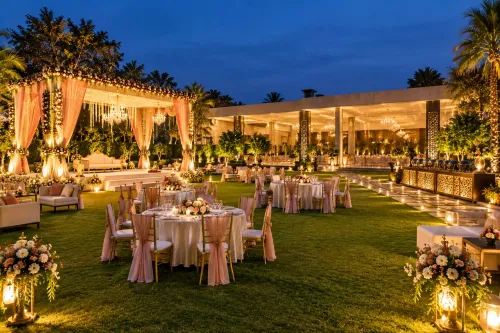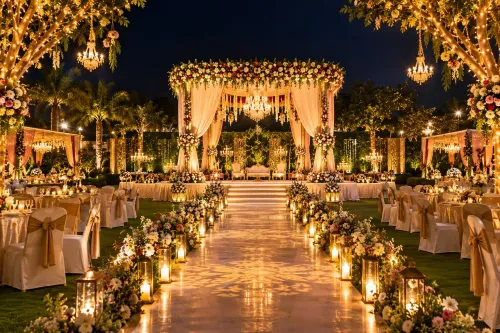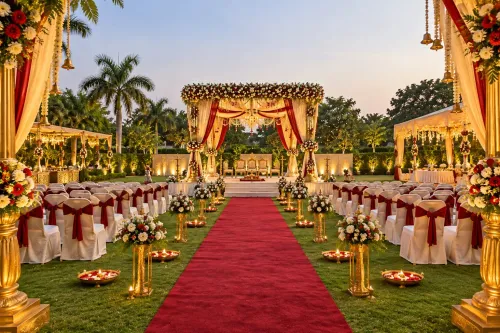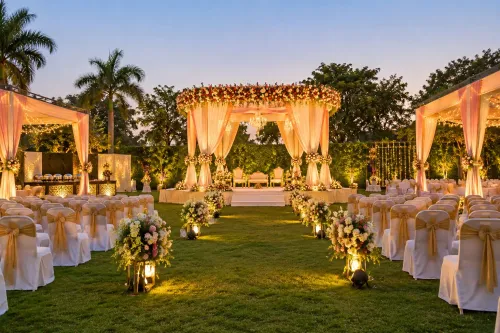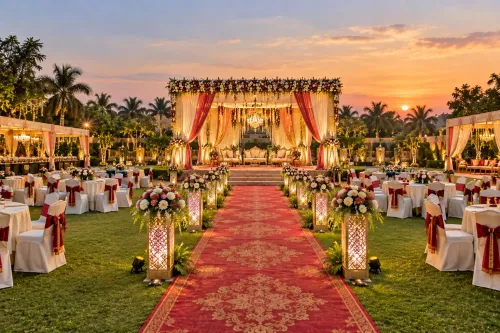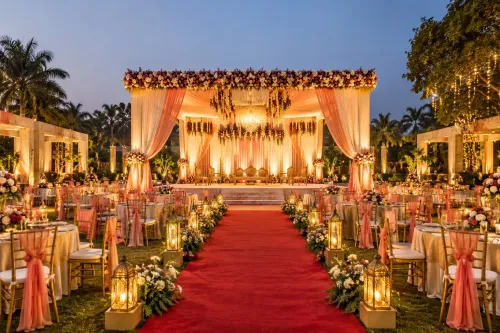
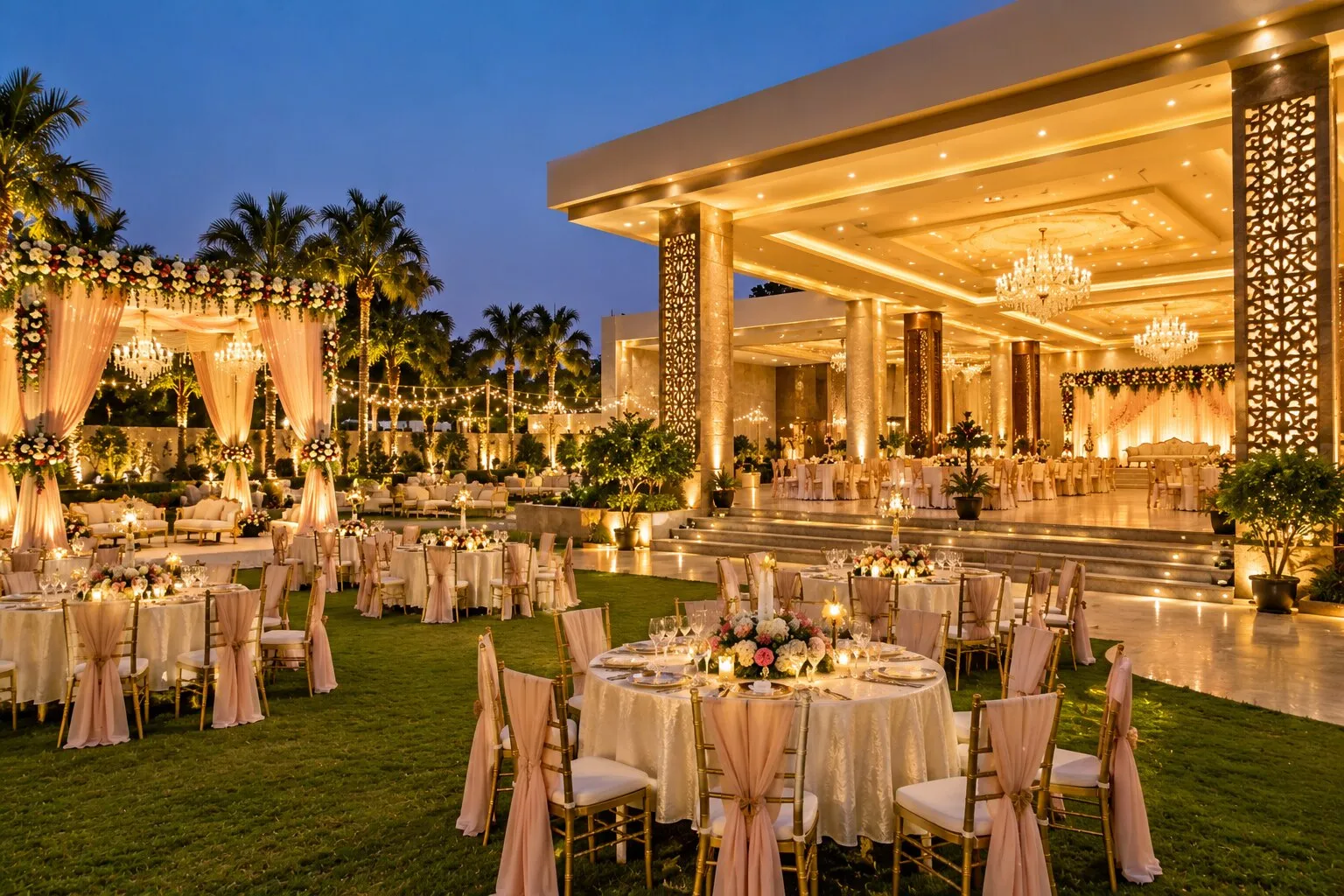
Rain changes the usable size, safety and comfort of an event space, so a large lawn is not automatically a better choice than an enclosed hall. By the end, you will be able to compare weather protection, guest movement, food service, access and backup terms before choosing a lawn, hall or hybrid layout in Owala, Thane.
Key takeaways
- Choose a hall when rain, wind or muddy ground threatens guest comfort.
- Use a hybrid plan when you need lawn ambience with reliable indoor shelter.
- Inspect drainage, raised flooring, power backup and covered guest routes.
- Test the venue after heavy rain, not only during a dry site visit.
Which is safer and more usable during a monsoon event: a lawn or a hall?
A 10,000-square-foot lawn is not a 10,000-square-foot guest area during monsoon. The marquee, raised flooring, stage, buffet, dance floor, service corridor and covered circulation consume space, while rain exposure, wind-driven water, poor drainage and muddy ground reduce usable seating further.
| Option | Monsoon usability | Main risks to inspect |
|---|---|---|
| Lawn | Works only when the entire guest route and programme are weather-protected | Ponding, unstable seating, slippery flooring, exposed buffet, children entering mud, difficult elderly access and cancellation after heavy rain |
| Enclosed hall | Provides steadier air-conditioning, seating and guest comfort | Humidity, poor ventilation with doors closed, water through loading doors, slippery lobby or parking surfaces, generator changeover and lift dependence |
| Hybrid | Keeps an open element while sheltering meals and activities | Guests moving between surfaces, slow changeover and an indoor backup that is not exclusive |
For an outdoor venue vs banquet hall for monsoon events Owala Thane, compare the fully weather-protected guest area with the enclosed hall, not the advertised lawn and floor areas. Lightning requires immediate movement into a substantial enclosed building; an open marquee, tree or temporary metal structure is not safe shelter.
Ask who decides the rain trigger and cancellation, and record it in the contract. Loudspeakers and public-address systems are restricted from 10 p.m. to 6 a.m. under the Noise Pollution (Regulation and Control) Rules, 2000; confirm any local or state exemption in writing rather than assume one.
When should you choose a lawn, banquet hall or hybrid plan?
A banquet hall is the safer default when guests need continuous comfort, the meal is seated, the programme runs for several hours, or the rain forecast is high. An “outdoor venue owala thane” search or “party lawns thane monsoon” listing does not prove that the full event can operate outdoors.
| Option | Choose it when | Non-negotiable condition |
|---|---|---|
| Banquet hall | Seated meal, long programme, elderly guests or high-rain forecast | The hall remains comfortable at the real guest count |
| Lawn | Short programme with open-air ceremony and low rain probability | Covered guest space, flooring, drainage and enclosed fallback handle everything |
| Hybrid | Open ceremony, welcome drinks or photography; sheltered dining and stage activities | Staff can move guests quickly into an exclusive indoor backup |
Use the stated guest count only after requesting a scaled floor plan. Deduct the stage, buffet, dance floor, tables, service aisles, emergency exits, toilets and gift or registration table from advertised capacity.
Choose a lawn only if that reduced capacity covers the full programme, including meal service and guest movement. Choose a hybrid plan when open space adds value but dining, performances and older guests need shelter.
Ask two operational questions before paying: Is the indoor backup exclusive to your event, or shared with another booking? How many minutes will staff need to move guests, food, décor and equipment? A small backup room or slow changeover defeats the plan.
What monsoon infrastructure must you inspect before booking?
A decorative canopy is not monsoon infrastructure. For an outdoor party venue in Thane, inspect the structure, ground, electrical system and emergency arrangements in this order:
1. Confirm a fully covered, side-enclosed marquee with sealed roof joints, sloped roof drainage, gutters or downpipes, anchored or ballasted supports and raised waterproof flooring. Ask where runoff goes, where drainage outlets discharge, and whether flooring can be installed without damaging underground utilities.
2. Walk every guest route. Require non-slip surfaces, covered walkways and a dry path between drop-off, dining, toilets and the stage. Reject ponding, muddy edges and flooring that shifts underfoot.
3. Inspect power separately from rain. Keep distribution boards, generators and other electrical equipment off wet ground; require raised electrical points, sealed cable routes, cable ramps and correctly rated residual-current protection. Generator backup is useful only when cables and connections remain protected.
4. Check the catering zone. It needs a protected roof and side enclosure, firm non-slip flooring, weather protection for LPG cooking and safe separation between cooking, electrical equipment and guests.
5. Ask who obtains fire permission or a fire no-objection certificate for temporary stages, LPG cooking and large electrical installations. Confirm that emergency exits stay clear after seating and décor, and ask where extinguishers and LPG cylinders are placed.
6. Treat lightning as a separate hazard. Isolated trees, open-sided tents and temporary metal structures are not lightning shelters; require a substantial enclosed refuge and a procedure for suspending outdoor activity.
A dry-season inspection proves little. Do not book until the manager shows drainage performance, the rain plan and the physical route you will use.
How can you test whether the venue remains usable after heavy rain?
1. Visit the event venue Ghodbunder Road after heavy rainfall if possible; a dry-season tour cannot prove that the site drains. Press the lawn at several points and reject soft, sinking soil that will destabilise flooring, chairs or vehicles.
2. Walk the entire property and mark low points, drainage outlets and ponding at the stage, buffet, toilets, entrance and parking. Ask where each outlet discharges. Inspect the drop-off from the vehicle side without crossing grass, and confirm vehicles can reach it without churning the lawn.
3. Walk the complete guest route from parking to entrance, dining, washrooms and stage. Repeat it during the proposed event hours, checking lighting, puddles, queues and slippery surfaces. Check whether cars, valet staff, catering deliveries and pedestrians must share one narrow access point.
4. Ask for roof-leakage records. Inside, inspect ceiling stains and damp patches; outside, check sidewall gaps and pooled water around marquee edges. A covered structure that leaks at its perimeter is not a dry backup.
5. Require a written rain plan naming the rain trigger, decision-maker, indoor backup space, exclusive capacity, changeover time, tenting or layout-change costs, postponement process and cancellation terms. Include flooring and covered-area limits in the contract.
A verbal promise that the lawn can be covered is not enough. Ask for the plan in writing before paying a deposit.
What should you confirm about guest arrival, food service and the backup contract?
Do not approve a monsoon layout until you can trace a dry route from vehicle drop-off to every essential facility. Near Ghodbunder Road and Owala access routes, inspect the proposed arrival hours rather than assuming parking, traffic or valet movement will be convenient.
| Check | Outdoor plan | Hall or backup plan |
|---|---|---|
| Arrival | Covered drop-off, dry queue and accessible route for elderly guests | Covered entrance without a narrow shared vehicle path |
| Movement | Stable seating and a non-slip path children can use safely | Dry route between entrance, seats, toilets and stage |
| Operations | Covered buffet, bar, photographer, stage access, toilets, registration or gift table and server routes | Confirm loading, service and guest routes remain separate |
| Catering | Wind protection, firm non-slip buffet surface and weather-protected power for hot holding | Confirm kitchen-to-buffet transfer stays under cover |
| Electricity | Keep cables and equipment separated from wet areas | Identify protected outlets, changeover equipment and emergency access |
Ask every manager for the same scaled plan before paying a deposit. Include the covered-area capacity, rain trigger, decision-maker, indoor space, changeover time and each party’s cost for flooring, sidewalls, relocation, staffing, cancellation or postponement.
Apply that comparison to Welcome Lawns & Banquet, Ghodbunder Road Thane and the alternative venue without accepting different assumptions. Require the contract to state whether the backup is exclusive to your event; otherwise another booking can leave your “rain plan” unusable.
Related items
Open Outdoor Lawn Rental Service Open Outdoor Lawn Rental Service Lawn Rental service for Events such as Weddings, Pre Weddings, Social Events, Birthday Parties etc. |
Venue Rental Lawn Rental Service ₹200600 Lawn Rental service for Events such as Weddings, Pre Weddings, Social Events, Birthday Parties etc. |
Frequently asked questions
Which is safer and more usable during a monsoon event: a lawn or a hall?
A banquet hall provides stronger protection from rain, wind-driven water and muddy ground. A lawn works when it has tested drainage, raised flooring, secure weatherproof cover and covered routes between parking, entry, dining and toilets.
When should you choose a lawn, banquet hall or hybrid plan?
Choose a hall for large guest counts, elderly guests, long functions or forecasts showing persistent rain. Choose a lawn when outdoor space is central and the venue can protect every essential activity. Choose a hybrid plan when the ceremony or décor needs a lawn but dining, dancing or the rain backup needs a hall.
What monsoon infrastructure must you inspect before booking?
Inspect storm-water drains, slope, pump capacity, generator backup, raised flooring, tent anchoring, waterproof electrical distribution, covered circulation, toilets, kitchen access and the route from parking to the entrance.
How can you test whether the venue remains usable after heavy rain?
Visit during or soon after heavy rain and walk the guest route. Check for standing water, slippery flooring, leaks, muddy service lanes, water entering the marquee, blocked drains and generator access problems.
What should you confirm about guest arrival, food service and the backup contract?
Confirm covered drop-off, parking on firm ground, accessible routes, dry loading access for caterers, protected buffet placement, rain-related postponement terms, the backup space, changeover deadline and who pays for extra flooring, pumps or tents.
Related products
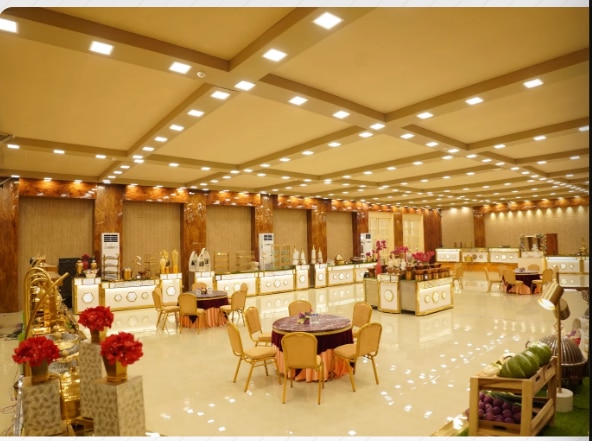 | Social Gatherings & Cultural Functions Social Gatherings & Cultural Functions At Welcome Lawns & Banquet, we believe every personal celebration is a grand festival. |
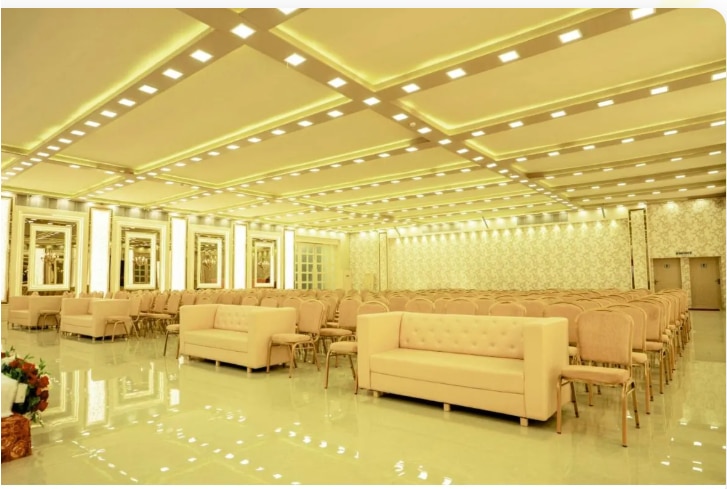 | Birthday & Special Occasions Birthday & Special Occasions Welcome Lawns & Banquet turns your special day into an unforgettable experience. |
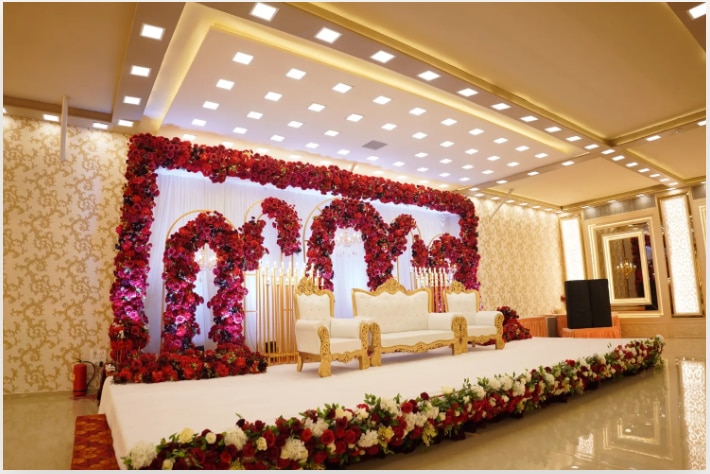 | Wedding & Engagements Wedding & Engagements Welcome Lawns & Banquet turns your special day into an unforgettable experience. |
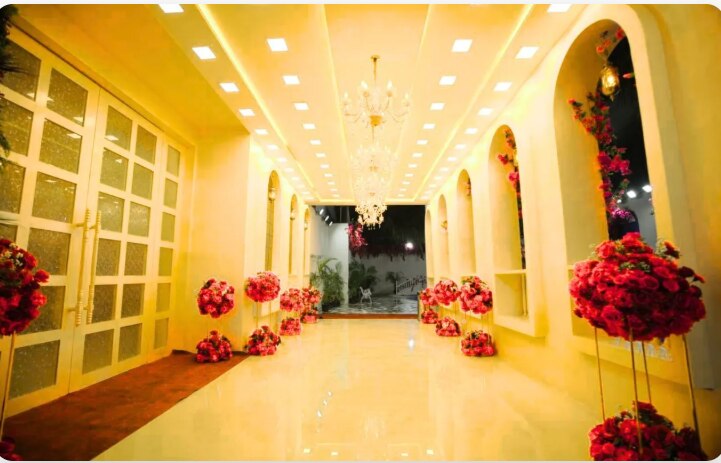 | Corporate Events & Conferences Corporate Events & Conferences Elevate your brand presence with a venue that reflects corporate prestige. |
Keywords